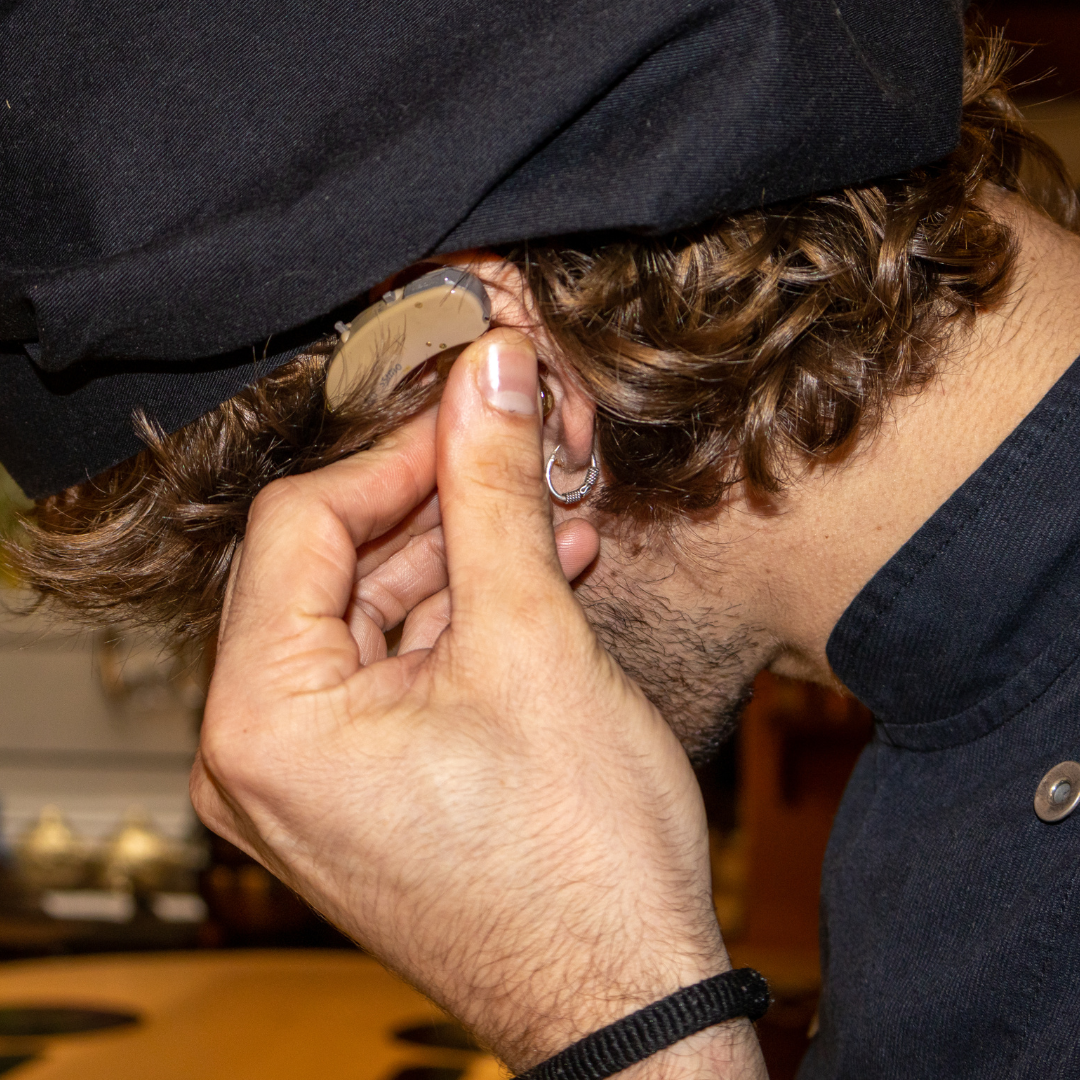
Group discussions in restaurants often become difficult to comprehend when room acoustics compete with your focus and hearing. Our specialists can evaluate hearing under both calm and noisy listening conditions to establish why noisy rooms present such difficulty. When we isolate the root mechanism behind your difficult hearing, we guide you toward customized communication solutions.
How Can Hearing Seem Normal at Home but Fail in a Restaurant?
In quiet conditions, an optimal signal-to-noise ratio ensures that the desired speaker sounds markedly clearer than surrounding sound. Modern restaurant environments create the complete opposite listening environment. Overlapping chatter, piped music, kitchen clatter, and hard-surface reverberation mask speech, forcing the brain to expend immense cognitive effort to track conversation.
This problem can occur with high-frequency hearing loss, auditory-processing difficulty, or age- and noise-related changes. Visual limitations from low lighting, cognitive fatigue, and sitting farther away from conversational partners amplify speech degradation. Many individuals register normal audiometric thresholds on standard pure-tone screenings yet show profound deficits during speech-in-noise testing. Communication breakdowns in loud restaurants should be professionally assessed even if one-on-one listening feels uncompromised.
How Audiologists Identify High-Frequency Hearing Loss
The diagnostic workup opens with an extensive intake examining difficult listening environments, past noise trauma, tinnitus presence, family history, and medical history.
Pure-tone audiometric evaluations measure the absolute quietest sounds audible across specific octave frequencies using air and bone conduction. High-frequency loss often creates an audiogram pattern in which thresholds become poorer as pitches rise. Supplementary assessments routinely include diagnostic tympanometry to analyze middle-ear status alongside word-recognition testing to determine speech clarity.
Because a quiet booth does not recreate a busy dining room, speech-in-noise testing can add valuable information. The test assesses word and sentence discrimination as background acoustic competition intensifies. Together, these audiological findings indicate whether the issue involves sound audibility, speech intelligibility, noise-processing dysfunction, or multiple compounding factors.
How Auditory Processing Difficulties Impact Adult Hearing
Auditory processing disorders interfere with the brain’s ability to process and decipher acoustic signals arriving from the ears. Even when the ears detect individual frequencies accurately, the central auditory system may falter at sorting overlapping voices, distinguishing close speech sounds, or processing fast-paced dialogue. Our clinical team starts by examining peripheral auditory thresholds, subsequently deciding if an auditory-processing test battery or multidisciplinary consultation is necessary.
Practical Strategies for Improving Speech Understanding in Noise
Small, intentional adaptations can optimize the clarity of speech reaching your ears and leverage helpful visual speech cues. When planning to dine out, select restaurants with calmer atmospheres or arrange reservations during off-peak hours. Venues with booths, acoustic panels, curtains, carpeting, and other sound-absorbing features may be easier than open rooms filled with hard surfaces.
While seated at the restaurant:
- Ask for seating positioned far away from open kitchens, noisy bar areas, ceiling speakers, and large parties.
- Position yourself with your back toward a solid partition to dampen intrusive background noise from behind.
- Face your speaking partners directly in well-illuminated seating to maximize visual speech cues.
- Sit as close to the speaker as comfort permits to preserve speech volume and clarity.
- Orient your stronger ear toward the key person you want to follow in conversation.
- Ask the speaker to rephrase the missed portion instead of repeating everything.
- Actively confirm key information rather than smiling and guessing at ambiguous dialogue.
- Take a brief listening break when fatigue begins to build.
- Encourage friends to enunciate clearly while maintaining an even, normal conversational tempo.
- Elevated yelling distorts auditory signals and seldom improves actual phonetic comprehension.
What Are the Best Tools for Hearing with Background Noise?
The best technology depends on the cause of the difficulty, the listening environment, and whether hearing loss is present. Advanced hearing aids utilize beamforming directional microphones, adaptive noise reduction, and specialized restaurant programs to elevate voices directly ahead while suppressing ambient chatter. Users should establish realistic expectations because no hearing device can fully eradicate all unwanted ambient speech.
Wireless remote microphones provide the most effective enhancement to real-world signal-to-noise ratios. The microphone is placed near or worn by the speaker and sends that voice directly to compatible hearing aids or another receiver. This reduces the effects of distance and surrounding noise.
Further practical hearing technology options include:
- Wireless conference table microphones that capture multi-speaker discussions
- Telecoils or hearing-loop systems in equipped venues
- Mobile speech-to-text applications delivering instant visual captions during dinner
- Consumer wireless earbuds or hearables featuring customizable assistive listening modes
- Decibel-monitoring apps and crowd-sourced dining platforms that track restaurant noise
We will help compare available technology, verify device compatibility, and instruct you on utilizing your selected hearing equipment.
Professional Audiological Solutions for Loud Listening Environments
A comprehensive hearing evaluation looks far beyond the common misconception of “I hear fine in quiet environments.” Our clinicians review the specific environments, vocal pitches, and decibel levels that trigger breakdowns to design a personalized test protocol. The assessment may include pure-tone thresholds, middle-ear testing, word recognition, and speech-in-noise measures. Auditory-processing testing may be considered when the history and initial results support it.
Abrupt auditory reductions, unilateral hearing shifts, or rapid functional deterioration require prompt assessment by an ear, nose, and throat physician. Personalized care identifies the source of the difficulty rather than assuming restaurant noise is the only problem.
Arrange a Hearing Evaluation With Us Now
If noisy restaurant gatherings leave you struggling to follow dialogue, pulling away, or feeling completely drained, schedule an audiological evaluation with our team. We will help you navigate hearing in noisy environments by implementing advanced hearing aid options, assistive accessories, or therapeutic auditory strategies tailored to your lifestyle.
Contact us to request an appointment and take the next step toward easier conversations.