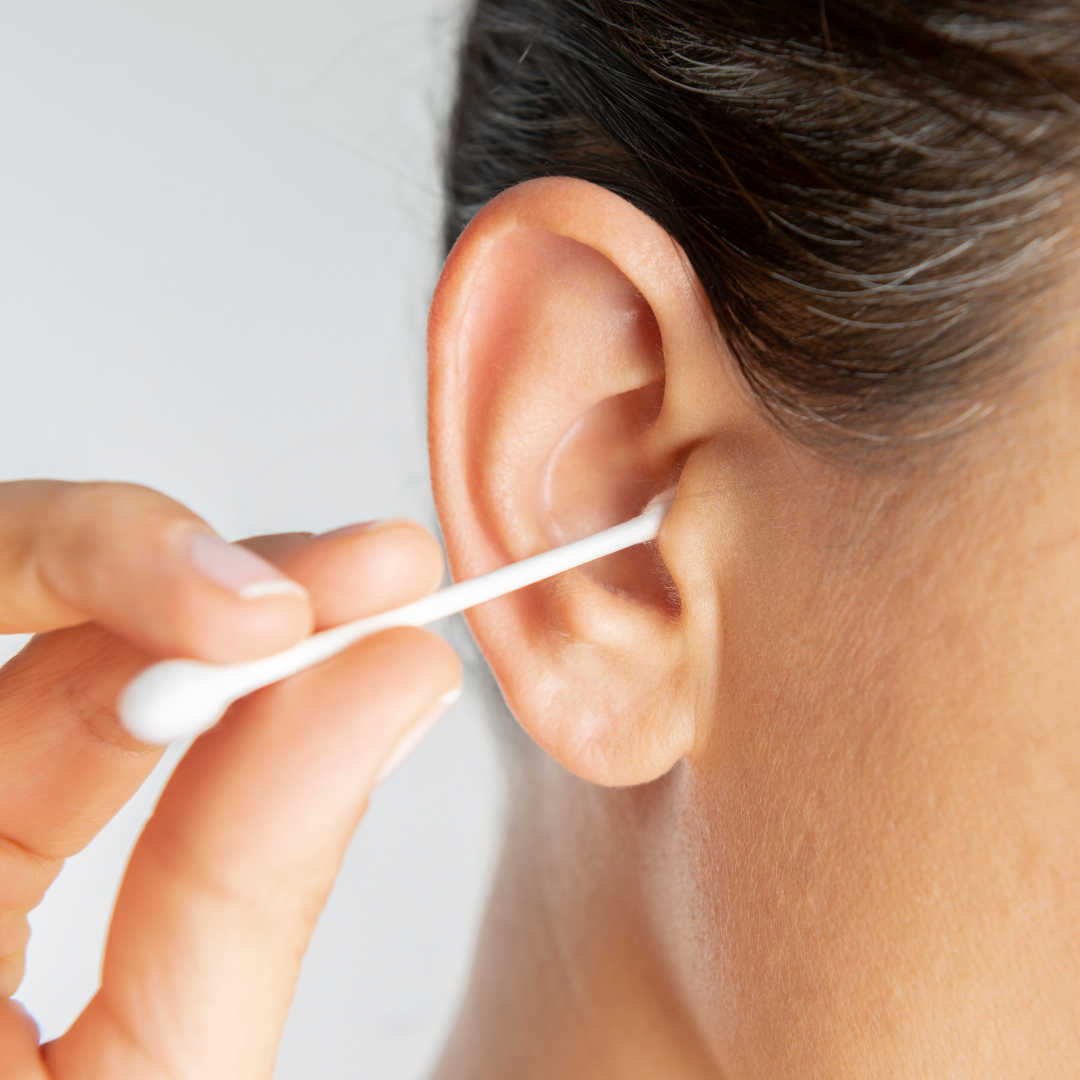
Even though cotton swabs seem practical for routine hygiene, probing the inner canal creates deeper impactions and threatens long-term ear health. We assess whether your earwax demands professional intervention and provide customized care strategies that match your clinical profile. Ears don’t always need manual cleaning; however, if wax builds up, we can help patients safely remove excess wax.
Why Are Q-Tips Bad for Your Ears?
Earwax, or cerumen, is not dirt. It serves by ensnaring foreign debris, discouraging bacterial invasion, lubricating skin linings, and safeguarding the inner canal. Rhythmic jaw motion and outward dermal migration move drying wax toward the external orifice, where it effortlessly washes away.
Placing a cotton applicator inside the canal completely interrupts this automated self-clearing cycle. While the fibrous tip might extract superficial wax particles, it predominantly forces deeper accumulations toward the tympanic membrane. Ongoing cotton swab use regularly condenses wax into a solid obstruction, causing a congested feeling that drives repetitive cleaning attempts.
Cotton swabs may be used around the folds of the outer ear, but they should not enter the canal.
How Cotton Swabs Cause Physical Trauma to the Ear
Canal skin is thin, vascular, and highly vulnerable to mechanical abrasions. Microscopic tears cause acute discomfort or hemorrhage while exposing tissue to bacteria, which heightens the probability of an outer ear infection. In addition, the cotton head can loosen and become retained as an obstructing foreign object in the ear.
Potential audiological complications include:
- Deep mechanical cerumen impaction
- Skin abrasions, tissue swelling, severe irritation, and active bleeding
- Localized microbial infection of the external canal
- Retained cotton tips or foreign debris inside the canal
- Traumatic puncture or laceration of the eardrum
- Ossicular chain disruption or damage behind the tympanic membrane
- Acute hearing loss of a temporary or permanent nature
- Tinnitus, dizziness, or severe ear pain
While severe structural trauma occurs infrequently, accidental elbow jostling, sudden slipping, or over-insertion can provoke profound injury.
Clinical Guidelines on Earwax Removal Frequency
The majority of individuals do not require routine or scheduled cerumen extraction. Functional ear canals naturally evacuate wax, and everyday washing clears away deposits on the outer ear. Overcleaning can dry or irritate the canal and may increase the likelihood of infection or impaction.
Intervention becomes necessary whenever wax creates an anatomical blockage, obstructs otoscopic examination, disrupts hearing aid operation, or causes aural distress.
How to Address Earwax Safely at Home
If earwax is not causing symptoms, leaving it alone is usually the safest option. Clean exclusively around the exterior auricle using a soft, moist cloth, letting the auditory canal clean itself naturally.
When wax needs softening, we may recommend an over-the-counter cerumen-removal product or drops containing ingredients such as mineral oil, glycerin, saline, or carbamide peroxide. Administer strictly the dosage indicated on the packaging and adhere precisely to the recommended treatment duration. Cease use at once if you experience localized pain, acute vertigo, cutaneous rash, or intensifying discomfort.
Performing home ear irrigation carries distinct risks and requires prior professional evaluation and hands-on technique instructions. Never attempt to flush your ear canal with a pressurized dental water irrigator. Reject risky methods such as ear candling, rigid metal scoops, camera-guided probes, hairpins, and home suction gadgets. These dangerous tools carry severe risks of burning skin, lacerating canal tissue, puncturing the tympanic membrane, or packing wax inward.
When to Seek Audiological Care for Cerumen Impaction
Schedule a professional visit if the canal remains occluded after softening treatments, cerumen appears deeply lodged, or home remedies fail. Expert removal is the safest path for patients who struggle to hold still, individuals with narrow ear canals, hearing aid wearers, or those with surgical contraindications to irrigation.
Arrange an immediate clinical evaluation for:
- Persistent otalgia, stubborn itching, or painful sensitivity around the ear
- Hemorrhagic discharge, purulent fluid, clear otorrhea, or foul-smelling drainage
- Fever or swelling around the ear
- Sudden-onset tinnitus or vestibular dizziness
- Rapid-onset hearing impairment or ongoing hearing deficits post-cleaning
- A suspected perforated eardrum or retained cotton tip
- Recurrent wax blockages that compromise hearing aid performance
Any rapid-onset hearing loss in one ear must be evaluated as an emergency rather than dismissed as a wax plug. Prompt testing can distinguish a blockage from a time-sensitive inner-ear problem.
Professional Techniques for Cerumen Removal
We first examine the canal with an otoscope or microscope to confirm that wax is present and look for infection, injury, or an eardrum perforation. The ideal extraction strategy is dictated by the consistency of the wax, ear canal dimensions, clinical background, past ear procedures, and patient physical stability.
Professional options include:
- Wax-softening drops before or during the appointment
- Controlled ear flushing using warm, body-temperature water on intact eardrums
- Gentle micro-suction performed under clear binocular visualization
- Manual removal with a loop, curette, or small forceps
Direct illumination and magnification enable the provider to spare sensitive canal skin and stop promptly upon patient feedback. Patients presenting with dry or tightly impacted wax may require a combination of these clinical approaches. Following cerumen extraction, a complete post-procedure examination verifies that the canal epithelium and tympanic membrane are intact. Should lingering fullness, tinnitus, balance instability, or reduced hearing continue, targeted diagnostic exams can pinpoint the secondary factor.
Contact Us for Safe Professional Earwax Removal
If you notice a blocked sensation or changes in auditory clarity, contact us for an evaluation rather than inserting a Q-Tip. Your clinical visit will cover a comprehensive review of symptoms, otologic surgical history, hearing aid utilization, home care efforts, and metabolic contributors to wax buildup. Connect with our practice today to reserve an appointment for safe, professional earwax removal.